


AI adoption moves faster than any policy can. New tools, models and agents appear every week, often without IT knowing. GRACE Governance delivers Minimum Viable AI Governance: it discovers every AI system in use, classifies the risk, applies controls only where they’re needed and generates the audit evidence automatically. Your business moves faster without losing control.
Book a meeting
Move from annual reviews and spreadsheets to a live register, proportionate controls and evidence that builds itself. Low-risk AI gets a fast, governed route. High-risk AI gets the oversight it needs. The same data shows which AI tools deliver value and which are duplicated, so you can scale what works.
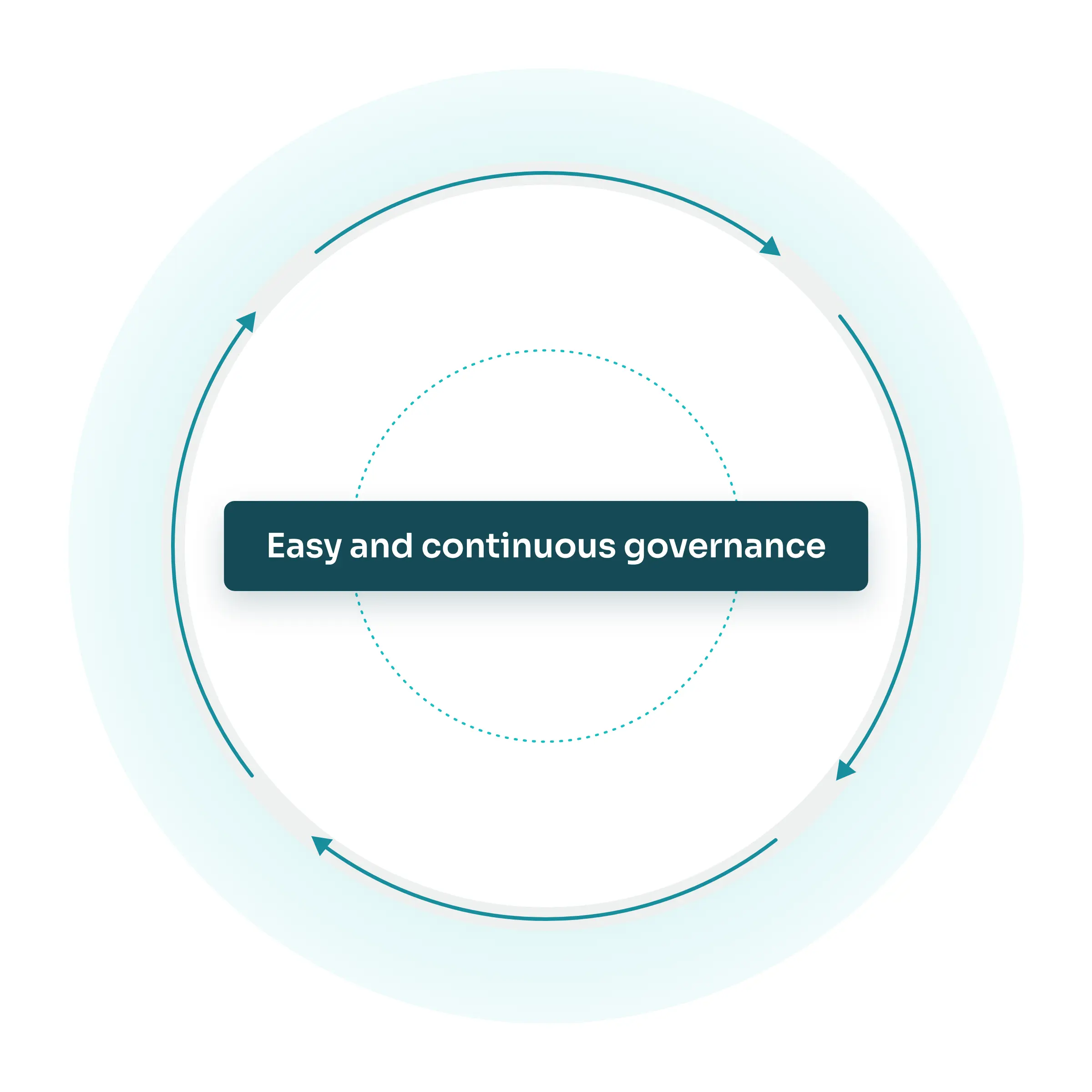
See every AI in use, including the ones nobody approved.
GRACE continuously discovers AI tools, models, systems, agents, use cases and connected datasets across cloud, on-premises and SaaS environments. Each discovery arrives as a structured record, ready for a person to confirm. No surveys. No spreadsheet that goes stale.
Give every AI use case an owner.
Every material use case gets a business owner, a technical owner and an approval status. Unowned AI is ungovernable AI. GRACE makes ownership explicit from the first day.
Classify risk the same way, every time.
GRACE assesses each use case against the four EU AI Act risk tiers (unacceptable, high, limited and minimal) and other applicable frameworks. It applies the classification at registration, so there's no case-by-case committee bottleneck.
Apply controls where the risk warrants them, and only there.
Low-risk innovation moves freely. High-risk use cases get approvals, data controls and human oversight. Employees get a governed route to the AI they need, not a blanket restriction.
Catch change, drift and policy breaches after deployment.
The AI registry and continuous monitoring detect change, drift and policy breaches as they happen, not at the annual audit. The same data shows adoption and business value per use case: which tools deliver, which justify expansion and which are duplicated.
Produce the proof before anyone asks.
GRACE maintains decision records, audit trails, control mapping and compliance status automatically. When a customer due diligence questionnaire, a regulator or an internal audit asks, the evidence already exists. Under the EU AI Act, it's in many cases a legal requirement.
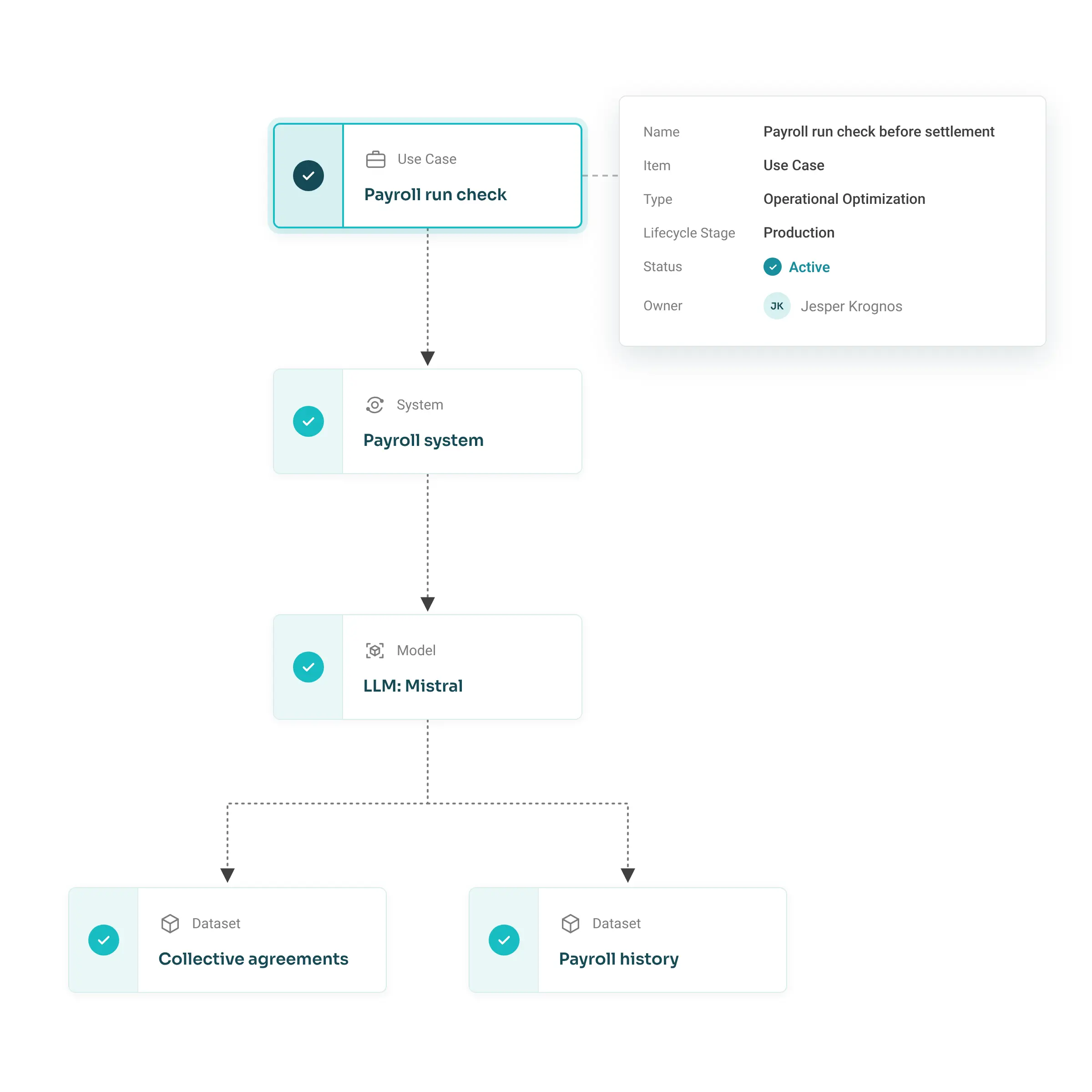
Every AI use case, system, model and data set registered, without anyone filling in a from.
A register that depends on self-reporting is out of date the day it's finished. The AI Auto Registry in GRACE Governance discovers AI use cases, systems, models and connected datasets automatically and proposes each one fo registration in one continously maintained AI inventory.
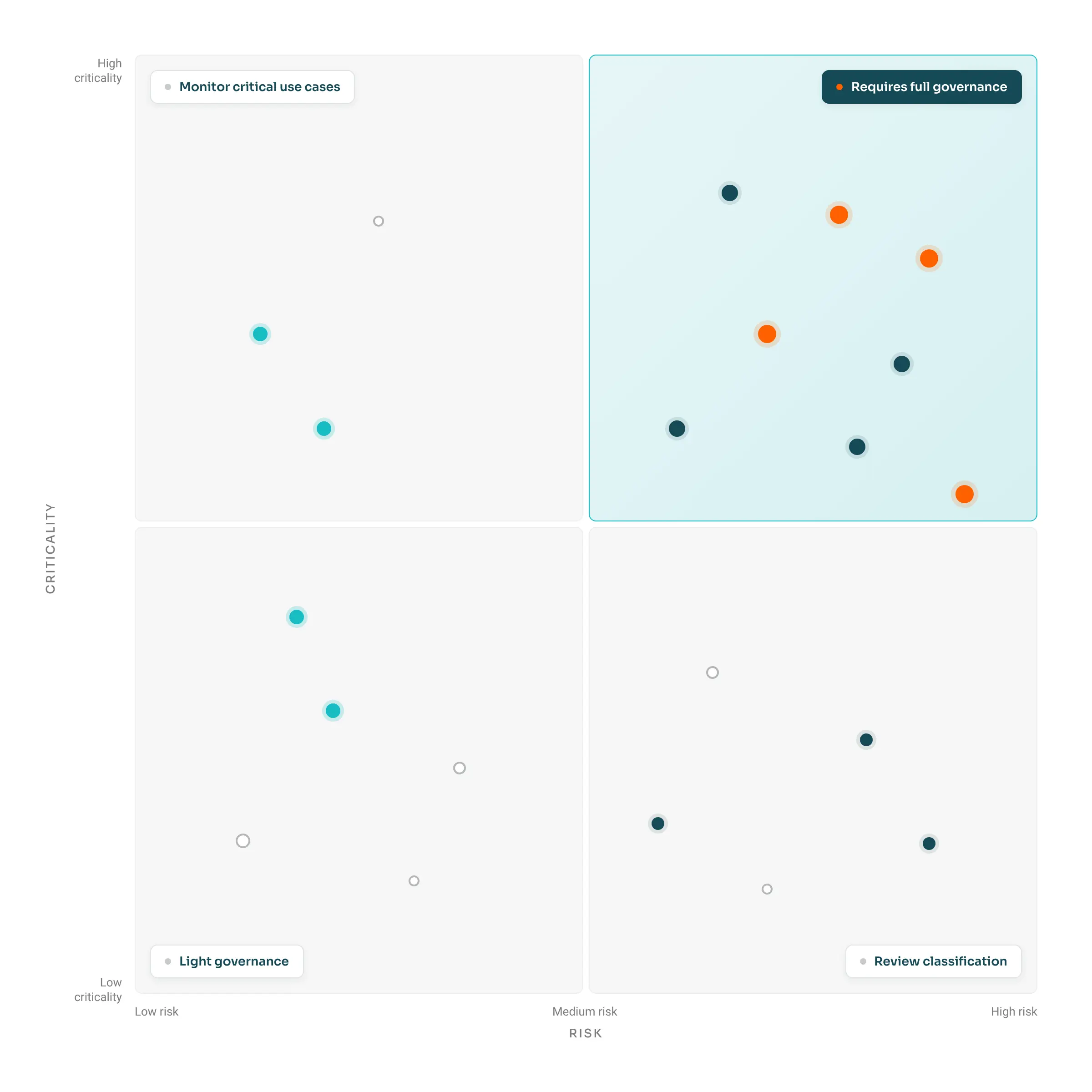
Classify risk the same way, every time.
GRACE Governance classifies each use case against the four EU AI Act risk tiers and your own defined policies and applies the result at registration. The case-by-case committee bottleneck disappears, and the controls that follow match the risk, not exceed it
A governed route to the AI people need, not a queue.
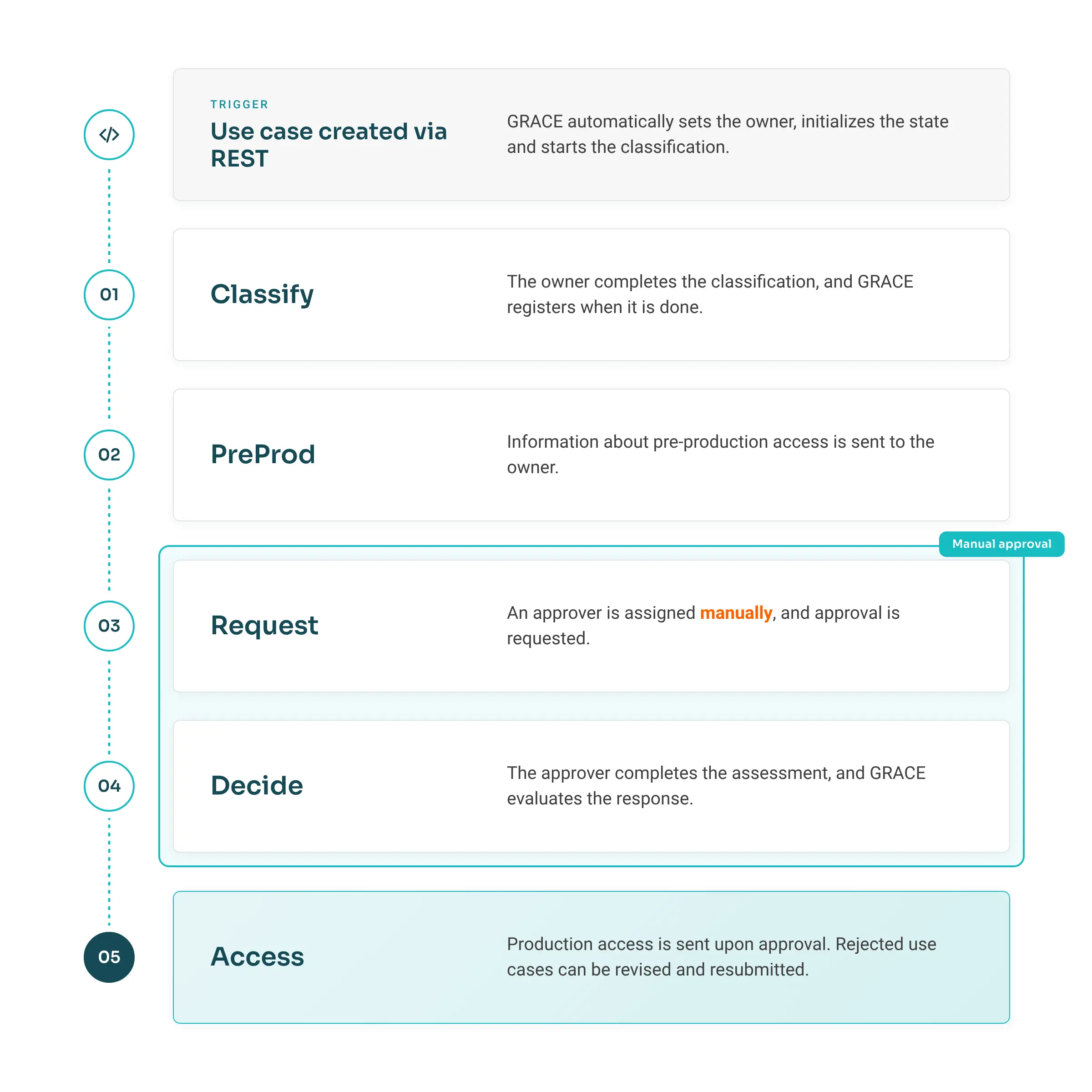
When governance is too slow, employees route around it. GRACE Governance gives them a faster governed route. The risk tier decides the path: approved use cases proceed without friction, restricted uses are addressed, and use cases that need review go through a defined approval process with a named decision maker.
Beyond the out-of-box AI infrastructure, GRACE offers three modules, enabling organisations to succeed with all AI operations. Modules can be integrated into your existing solutions individually.
Discover the GRACE AI Platform

GRACE is an amazing platform for data scientists - it has everything you need unified in one place, being intuitive and user-friendly.

GRACE is an intuitive and efficient platform that helped streamline our AI implementation from end-to-end. By simplifying the deployment process, it enabled our data scientists to dedicate more time to their core tasks and less to operational complexities.

Together with 2021.AI we are creating some of the most advanced and ambitious forecasting models for the shipping industry.

With the abundant data we have, we decided to work with 2021.AI to analyze how modern AI techniques can support our clients in increasing the resuls of their fundraising efforts.

We pride ourselves on innovation - a trait shared by 2021.AI, who are well positioned to help us fast-track our work with AI and Machine Learning. We have seen strong potential from our initial collaborations, and the next step for us is not to evaluate and assess.

We went from challenge to implementation and actual cost savings in a very short time span. The collaboration with 2021.AI showed us that AI is the key for Spar Nord to remain competitive in the future.


We work with the most ambitious and forward-looking leaders and organizations to successfully accelerate Responsible AI implementation.
Explore how we did it.
We’ll show you how the GRACE AI Platform gives you AI your are allowed to use.
Bring your toughest governance questions, and we’ll answer them with your use cases rather than a slide deck.


